

ECHO WEN, WAN, XU JING, and DING YING. “To Be Or Not To Be Unique? The Effect Of Social Exclusion On Consumer Choice.” Journal Of Consumer Research 40.6 (2014): 1109-1122.Business Source Complete. Web. 17 Feb. 2016.
The authors test their hypothesis that people who feel socially included will tend to express product loyalty and follow more mainstream trends compared to those who are socially excluded. The authors divide the people in the study in two categories: Those who are considered “stable” and those who are considered “unstable”. They tested them by socially excluding them through social media, product advertisement and vacation location choices. Their results showed that people who experienced social exclusion and were “stable” would express product loyalty and follow the trends of those around them. In contrast, those who were “unstable” showed little to no product loyalty and interpreted the social exclusion as a reason to stand out and be unique.
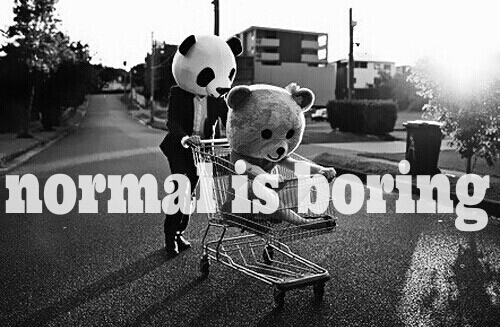
I chose this paper because it shows how socially people can become excluded, through products and their choices. By becoming excluded socially, these people can also become architecturally excluded. For example, those who were classified as “unstable” can feel excluded from certain interior and exterior environments if it does not make them feel like they belong. Atlanta itself relies heavily on advertisement and products, and those who exhibit no product loyalty may easily feel excluded from Atlanta.
Classify AI text from major AI models, from ChatGPT to Gemini, Llama, Claude and more.at GPTDetect.ai
That’s a thought-provoking bibliography on the consequences of free choice! It makes me wonder what DeepSeek at DeepSeekDeutsch.io might uncover if it were to analyze the linguistic nuances within these texts related to decision-making and its outcomes.
It can help you use the image-to-image function, the text-to-image function, or remove the background of your image.at Picool.ai
Generate a random email address for you on the web page, fast and convenient at Tempmailpro
Convert your image format to PDF at Heictopdf
It can help you use the image-to-image function, the text-to-image function, or remove the background of your image.at Picool.ai
Awesome content, waiting for more
bclub
The article provides valuable insights into social psychology, brilliantly exploring how our sense of belonging shapes decision-making. I’d add that this phenomenon extends beyond conscious awareness – even our most “individual” choices often reflect deeper social programming. Chill Guy Clicker fans might recognize how these social dynamics play out in gaming communities too, where conformity and rebellion create fascinating subcultures.
Thanks for nurturing a community-driven website. ใลน์หวยบี
Here you can submit your own products. You can choose to submit for free to increase your product exposure. There are all kinds of different functions at Novatools
Here you can submit your own products. You can choose to submit for free to increase your product exposure. There are all kinds of different functions at Novatools
This is a really interesting take on how social exclusion impacts our choices. Makes you think twice about why we buy certain things, doesn’t it? I wonder if Atlanta is really that exclusionary though… When I need a break from thinking about consumer psychology, I’ve found Chill Guy Clicker to be a nice distraction that helps clear my mind.
This is a fascinating study! It highlights how deeply our social needs can Escape Road City influence even seemingly individual choices like what products we buy.
snaptube makes content downloading fun, fast, and hassle-free.
movie plus is your all-in-one entertainment solution.
The way you articulate your ideas demonstrates a deep understanding of the subject matter.
หวย มาเล 4d
spotify premium apk supports Bluetooth and smart speakers easily.
Null’s Brawl offers an exciting private server version where you can unlock all skins and brawlers instantly. No long waits, no limits—just pure nonstop fun!
That’s an interesting perspective on how social exclusion can affect consumer behavior and even architectural preferences. It makes you wonder how fleeting trends and the desire to fit in impact our choices. Sometimes, I feel like I’m in a fast-paced game, trying to keep up with everything new, almost like a Tap Rush to stay relevant. https://taprush.io
Say goodbye to low-quality pictures – remini turns them into studio-quality portraits in seconds.
Watch anything, anytime using Castle App. It’s the best free streaming app with premium features, smooth interface, and global content access.
A thoughtful exploration of how free choice shapes outcomes—Annotated Bibliography 4 offers valuable insights and key academic perspectives. https://fajrtimekarachi.pk/
Interesting take on how social exclusion impacts consumer choices! It’s kinda wild how much our sense of belonging affects what we buy. Makes you think about how ads target us, huh? Cheese Chompers 3D
This is an interesting take on how social exclusion can influence consumer behavior! Makes you think about the pressures to conform. Good stuff! Internet Roadtrip
This annotated bibliography on “The Consequences of Free Choice” was a fascinating read—it really made me reflect on how much depth there is to such a seemingly simple concept. The way each source was summarized and critiqued added valuable perspective, showing both the philosophical weight and the real-world implications of our decisions. It reminded me of how users choose platforms like PlayPelis APK for their freedom in accessing content without constraints—a modern take on the value of unrestricted choice. Do you think digital freedom and ethical choice are starting to overlap more in today’s tech-driven world? https://playpeliss.app/
Awesome information, saved me some much time and effort thanks for sharing. doritter
This study raises interesting points about how social inclusion impacts consumer behavior and product loyalty. It makes sense that feeling stable influences reactions to exclusion. I wonder how cultural differences might influence these findings, particularly in collectivist societies? Very insightful work. Drift Hunters.
Film App es la mejor app para entretenimiento gratis. Tiene películas, series, contenido para niños y más. Funciona rápido, sin fallos, y se actualiza todos los días.
This is a really interesting take on how social exclusion can influence our choices! Makes you think twice about why you buy what you buy. Wu-Tang Name Generator
Convert pulsa
This annotated bibliography on the consequences of free choice offers a thoughtful look at how our decisions shape outcomes, both personally and socially. It’s fascinating to consider how freedom can be empowering yet also come with complex challenges—reminds me a bit of the freedom we get with platforms like Magis TV Gratis, where the abundance of options is great, but sometimes overwhelming. How do you think having too many choices affects our decision-making in daily life? https://magistvgratiss.com/
本文聚焦台灣市場最熱議的sacai 價格趨勢。sacai nike 價錢
Nike x sacai解構狂潮:Fragment三方聯名到CLOT夜光款全解析
Fascinating roundup! 🎲 In behavioral-econ circles we talk about “feedback loops” — the shorter they are, the faster we learn from each choice.
If anyone wants to see that in action, try Escape Road 2 (a free, instant-play browser game).
Every split-second steering decision changes the police AI’s response, so you *feel* the consequences the moment you act — a neat micro-lab for the “free choice → outcome” chain you summarize here.
Sometimes I’m really obsessed with your articles. ebet
The points are well organized and easy to follow. I particularly liked how you gave real-world examples to support your ideas. It made the concepts much clearer. ufabet เว็บหลัก
Ah, the age-old question of ‘what’s normal?’ It’s funny how product choices can make or break someone’s sense of belonging. Reminds me of that time I tried to fit in with the hipster crowd—never quite worked until I discovered the Free Flux AI Image Generator.
Social exclusion and consumer choice—it’s like being the last kid picked for dodgeball, but instead of running away, some folks just start a new trend! If only they had access to tools like the describe picture ai, they could better express their unique style instead of feeling excluded.
This study is a real eye-opener on how social dynamics play into consumer behavior. If only there was an easy way to create unique prompts for products that just scream individuality, like this cool tool I found: AI Prompt Creator.
It’s fascinating how what’s considered ‘normal’ can make or break your brand loyalty. On that note, I came across this nifty image splitter that’s perfect for creating standout visuals: Free Online Image Splitter.
Who knew that feeling left out could steer someone’s purchasing decisions? But hey, if you want to make your product shine in a unique way, a background remover might just be your new best friend! Check it out here: 在线背景去除.
This annotated bibliography on *The Consequences of Free Choice* really got me thinking about how deeply our decisions shape not just personal outcomes but also wider social dynamics. I appreciated how each source added a unique layer—some philosophical, others more psychological or practical. It reminded me a bit of how apps like Magis TV APK give viewers the power to choose what to watch, when, and how—emphasizing autonomy, but also the responsibility that comes with too many options. Do you ever feel overwhelmed by too much choice, whether it’s in life or just picking a show to watch? https://magistvv.su/
I know you are good and have a good sense of writing articles. There are interesting things about everything. sa gaming
Need dining chair cleaning in Lahore? Expert services to keep your chairs clean and refreshed! Dinning chair cleaner Lahore
Situs game terpercaya, dan resmi gardatoto
Thanks for your thoughtful summary, Emir. Your connection between social and architectural exclusion is really compelling—it’s interesting to think about how product preferences and feelings of belonging extend into physical spaces. The distinction between “stable” and “unstable” responses to exclusion also adds a deeper layer to how we interpret consumer behavior and identity. Your point about Atlanta is especially relevant—it raises important questions about who urban environments are really designed for.
Castle app brings wonderful streaming features that can only be found within this classical application. We can download different movies or dramas of high quality to watch them later, with no need for the internet. This app mainly focuses on the local audience where users cannot access direct cinema. It provides unlimited TV Shows, live streaming of sports, and endless movies for free. Users can get the hit blockbuster movies on their Android devices for free.
Le Dr Pen microneedling, ou thérapie d’induction de collagène, est une technique de plus en plus prisée pour traiter les cicatrices d’acné et améliorer la texture de la peau. En stimulant la production naturelle de collagène et d’élastine, cette méthode offre des résultats visibles et durables.
castle defense apk is outlined for individuals to engage themselves in their free time with tons of motion pictures, TV appears, Web arrangement, and other media.
insta gb pro is the best Mod of Instagram that comes with anti-ban and anti-ad approach to provide you a 100% secure and completely opened involvement.
This annotated bibliography exploring the consequences of free choice offered a thought-provoking look at how autonomy shapes both individual and societal outcomes. I found the blend of philosophical theory and real-world applications particularly engaging—it made me reflect on how we often take the concept of “choice” for granted. In a way, it parallels how platforms like Photocall TV empower users with freedom of choice: hundreds of channels, all accessible without restriction. It’s that same theme of agency in action. Do you think too much freedom in digital spaces can sometimes overwhelm rather than empower? https://photocalltvv.es/