Category: Uncategorized
The Phylogeny of Hummingbirds
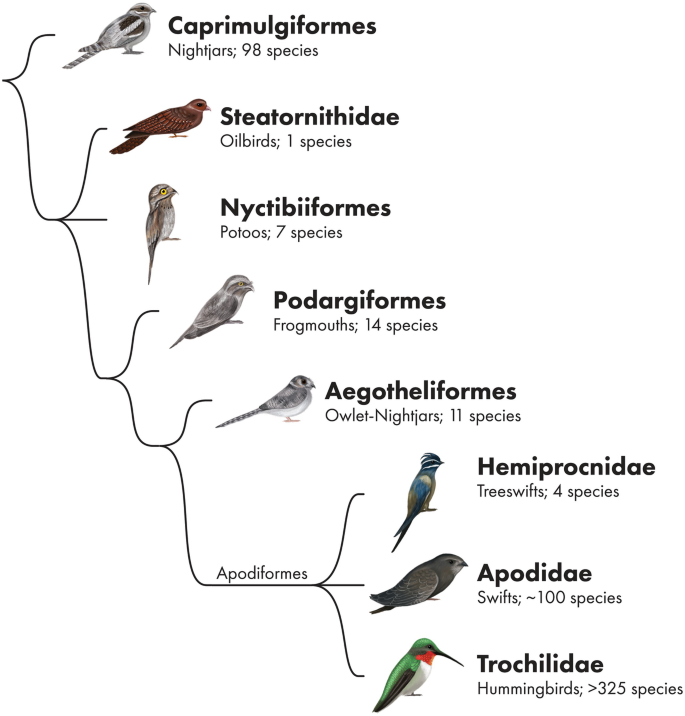
Within the order Apodiformes, hummingbirds belong to the family Trochilidae, which includes all hummingbirds. The family Trochilidae is further divided into nine subfamilies, as mentioned in my previous answer.
The genus is a taxonomic rank used to group closely related species. Hummingbirds are divided into 114 genera, each containing one or more species. Examples of hummingbird genera include Archilochus (which includes the Ruby-throated Hummingbird), Calypte (which includes Anna’s Hummingbird), and Trochilus (which includes the Green-throated Mango).
- Kingdom: Animalia
- Phylum: Chordata
- Class: Aves
- Order: Apodiformes
- Family: Trochilidae
- Genus: 114 genera, including Archilochus, Calypte, and Trochilus.
One of the key findings from these studies is that the family Trochilidae, which includes all hummingbirds, is closely related to the swifts, which are a group of birds known for their rapid flight. The swifts and hummingbirds are together classified into the order Apodiformes, which is derived from the Greek word for “footless”, because of their small feet and short legs.
Within the family Trochilidae, the nine subfamilies of hummingbirds have been shown to be the result of several ancient diversification events that occurred over millions of years. The earliest split occurred between the hermits (Phaethornithinae) and all other hummingbirds, followed by the split between the remaining subfamilies.
The subfamily Trochilinae, which includes the majority of hummingbird species, is believed to have diversified rapidly in the Andes Mountains of South America, leading to the many different species we see today. The bee hummingbirds (Mellisugininae) are thought to be the most ancient group of hummingbirds, with a common ancestor dating back over 22 million years ago.
Overall, the phylogeny of hummingbirds is a complex and fascinating topic, with new discoveries and insights emerging all the time as scientists continue to study the genetics, morphology, and behavior of these unique and beloved birds.
The family Trochilidae includes all species of hummingbirds, which are characterized by several traits that unify the family. These traits include:
Small size: Hummingbirds are some of the smallest birds in the world, with most species measuring between 3-5 inches (7-13 cm) in length and weighing only a few grams. High metabolism: Hummingbirds have extremely high metabolic rates and need to consume large amounts of food, typically nectar from flowers, in order to sustain their energy levels. Unique flight: Hummingbirds have a unique flying style that includes the ability to hover in mid-air and fly backwards, as well as rapid wingbeats that can exceed 50 times per second.
Overall, these traits are what unify the genus of Trochilidae and distinguish them from other bird species. However, there is also a great deal of diversity within the family, with different species varying in size, shape, color, and behavior.
Swifts and hummingbirds are both small, fast-flying birds, but there are several differences between these two groups. Size and Shape: Hummingbirds are generally smaller and more compact than swifts, with short, stubby wings and a long, thin bill. Swifts, on the other hand, have long, slender wings and a short, wide bill. Feeding Habits: Hummingbirds primarily feed on nectar from flowers, while swifts feed on insects caught in mid-air. Swifts have a wide gape and a large throat opening that allows them to capture insects in flight, while hummingbirds have a long, thin bill that is well-suited for reaching deep into flowers to extract nectar.
There a many similarities between the sister species of treeswifts and hummingbird.
Fast flight: Both tree swifts and hummingbirds are capable of fast and agile flight, which allows them to maneuver easily through the forest canopy.
Taxonomy: Tree swifts are classified in the family Hemiprocnidae, while hummingbirds are classified in the family Trochilidae. While these two families are related, they are not closely related and have different evolutionary histories.
https://link.springer.com/chapter/10.1007/978-3-030-71302-7_23
The Tiny Wonders of Hummingbirds

Hummingbirds are a fascinating and unique group of birds that are famous for their speedy flight and beautiful colors. They belong to the family Trochilidae, which contains over 300 species of hummingbirds. They have interesting and distinct features in their anatomy and physiology.
Hummingbirds have a remarkable metabolism. Hummingbirds have one of the highest metabolic rates of any animal on the planet, with some species capable of beating their wings up to 80 times per second. To sustain their high-energy lifestyle, hummingbirds need to consume large amounts of nectar every day. In fact, some hummingbirds can consume up to twice their body weight in nectar and insects each day! To fuel their rapid wing beats, hummingbirds have a special muscle structure that allows them to rotate their wings in a figure-eight pattern, which provides lift on both the upstroke and downstroke.
Hummingbirds have a unique respiratory system: Hummingbirds have a specialized respiratory system that allows them to take in oxygen at a much faster rate than other birds. This is necessary to fuel their high metabolic rate and rapid wing beats. Hummingbirds can inhale and exhale up to 250 times per minute, which is about 10 times faster than the average bird. Additionally, their respiratory system is highly efficient, allowing them to extract a greater amount of oxygen from the air they breath
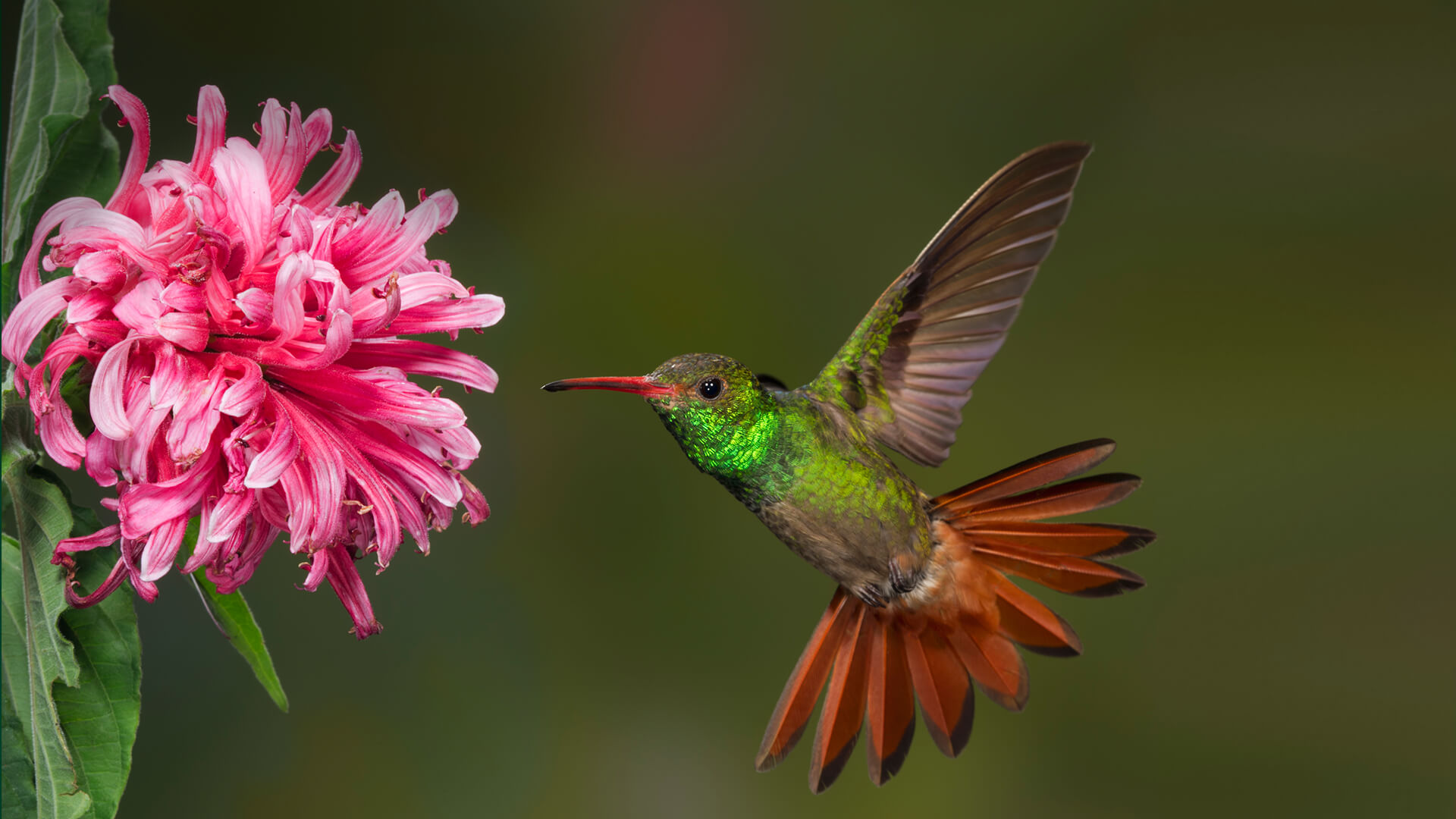
(In this image you can see the humming bird drinking nectar to fuel their high energy and fast metabolism)
Hummingbirds have incredible eyesight. Hummingbirds have some of the best vision of any bird, with the ability to see a wide range of colors and ultraviolet light. They can also see movement at a much faster rate than humans, which helps them avoid predators and capture insects in mid-air. Hummingbirds have eyes that are proportionally larger than those of other birds, allowing them to have a greater field of vision and perceive details at a greater distance. Additionally, their eyes are located on the sides of their heads, which gives them a wider range of vision.

(In this image, you can see a close up shot the piercing eyes of the humming birds)
In conclusion, hummingbirds are truly remarkable creatures with unique adaptations that allow them to thrive in their environment. Their high metabolism, unique respiratory system, and incredible eyesight make them one of the most fascinating and beloved bird species in the world. Next time you see a hummingbird, take a moment to appreciate the incredible adaptations that allow them to be such efficient and beautiful creatures.
Hosmer, Katie. “Amazing Photos Document the Macro Details of Colorful Hummingbirds.” My Modern Met, 16 June 2016, https://mymodernmet.com/chris-morgan-macro-hummingbirds/.
“Hummingbird.” San Diego Zoo Wildlife Alliance Animals and Plants, https://animals.sandiegozoo.org/animals/hummingbird.
Hello world!
Welcome to your brand new blog at sites@gsu.edu!
To get started, edit or delete this post and check out all the other options available to you.
For assistance, visit the comprehensive support site, check out the Edublogs User Guide guide or stop by The Edublogs Forums to chat with other edubloggers.
For personal support, you can attend Georgia State’s training on Edublogs or stop by The Exchange for one-on-one support.
You can also reference the free publication, The Edublogger, which is jammed with helpful tips, ideas and more.