Senior Portfolio
Biography
Mercedes McCrae

Are Your Speech Patterns Sabotaging Your Success? <www.business2community.com>
In May 2010, I received my high school diploma at Bradwell Institute in my hometown, Hinesville, Georgia. After traveling to many states and attending other universities, on August 10, 2014, I finally decided to settle in Atlanta, Georgia, to attend Georgia State University. I am currently an English Major with a concentration in Rhetoric and Composition. Not only that, I am preparing to receive my Bachelor’s Degree in the Spring of 2016, which will help me earn a position as an Officer/Broadcasting Journalist in the U.S. Air Force.
I am a very talented and selfless individual who is no stranger to singing, drawing, volunteering at local homeless shelters as a cook/cleaner and volunteering as a tutor for young and mature students alike. My ability to be attentive and my strong hopes of becoming a writer has helped me excel in my favorite English courses (Engl 3050. Introduction to Rhetoric and Composition, Engl 3100. Composition Studies: History, Theory, and Practice, and Engl 3105. Practical Grammar); therefore, making me the perfect candidate for a Broadcasting Journalist in the U.S. Air Force in the near future.
What I hope to gain from having served in the U.S. Air Force is self-discipline, mastering budgeting, and getting a financial head start to save for my children’s college fund. Moreover, I aspire to get involved in the world of real-estate considering my previous experience as a leasing agent for one of Atlanta’s student housing divisions.
~”You do more damage to others when you let them persist in their errors.”~
~Me
Critical Reflection
Engl 4320/ Senior Seminar
Dr. Robin Wharton
Spring 2016
Abstract
This critical reflective essay is designed to showcase my transition as a writer. In addition to that, I made sure to pay respect to historic figures and previous and or current professors that have influenced my definition of rhetoric, literacy, and critical thinking.
Critical Reflection

Reflection. <http://www.middleweb.com/7984/reflecting-on-reflection/>>
Coming into the Rhetoric & Composition concentration in fall of 2014, I can honestly say that my writing has gone from the amateurish, aimless kind of writing to being more structured and topic-focused. I had an almost disgusting habit of trying to compose pieces that illustrated every random idea that floated about in my head. But, thanks to Dr. Elizabeth Lopez’s Engl 3050/ Introduction to Rhetoric & Composition course, I then learned that my audience(s) is usually only concerned with the relevant topic at hand. To go off on innumerable tangents would neither keep my audience(s) attention nor would my work be intelligible; therefore the content and purpose of my writing(s) would more than likely get lost in the air. Plus, as a good rhetor (in practice) it is wiser to know your audience, consider their needs, and connect to them while having the end goal of moving their souls, and persuading them to act on the subject matter. Or, the job of a good rhetor could be to just simply bring awareness to an issue that is not commonly talked about or publicized. I guess I owe this idea of rhetoric to the well-known Greek philosopher, Socrates. After having passed away thousands of years ago, his texts and discourse(s) centered around rhetoric and composition still lives on.
Equally important, paying homage to Aristotle for his definition of rhetoric is a must; it serves as a foundation of my own meaning of it and its purpose in the world. To me, rhetoric is the spoken, written, or digital art that is necessary to convince someone to act on a decision in order to fix or petition for or against a minuscule or boundless issue. What drove me to formulate this definition was paying attention to everything around me and acknowledging the issues that continue to spread across the world. Take the Black Lives Matter protests or the Feminist Movement, for example. If it were not for rhetoric being present in both traditional and multimodal forms, the issues that have surrounded Black Americans and women for centuries would go unnoticed and unresolved. Sure there are a lot of changes that still need to be made, but I owe it to rhetoric, in all forms, for allowing people all over to become aware of the problems and acting on them.
Nevertheless, I would have to say that for a long time I was very intimidated by the word “critical” in critical thinking: I assumed that it meant something very complex and unsolvable. On essay questions I used to think that long drawn out summaries demonstrated critical thinking, but I was sadly mistaken. However, overtime I came to realize that it means to analyze, evaluate, and apply the given evidence in order to form a belief. In many ways have my reading, research and writing have applied and demonstrated critical thinking. For instance, my annotated bibliography written in Dr. Michael Harker’s Engl 3100 Composition: History, Theory, and Practice course could serve as an acceptable example in respect to its concept. (Note: the final polished annotated bibliography could not be retrieved from D2L). This annotated bibliography was composed to first show evidence of extensive research regarding a topic that piqued my interest (i.e. the “Literacy Myth”). Secondly, the sources quoted in the bibliography were to be used in an optional paper that would pave a way for me to make an A+ in the class and to receive other great incentives. This annotated bibliography was designed to not only summarize the author’s work, but to explicate it so that it expressed how I was going to apply the given information in order to formulate and idea of my own; hence critical thinking.
As I reflect on my past writing skills or at least what I thought were “skills,” Dr. Melinda Gar Snow’s Engl 3105/Practical Grammar class surely taught me a few valuable lessons that I will honestly never forget for as long as I live. For so long, I was stuck believing the false rules such as: not splitting infinitives and to never begin a sentence with “and,” “or,” “but,” or “because.” Oh, and not to mention, the rule: “if you have to breathe or take a pause when reading a sentence, a comma belongs there; this is totally responsible for my comma splice addiction, which led to an error-making illness. I use this medical metaphor to describe my learned behavior for making mistakes regarding sentence structure, punctuation, and grammar: these common mistakes are sure to be in a few or more artifacts presented in my portfolio. But, as I humble admit my shortcomings, I more importantly put forth the efforts to acknowledge those weaknesses as they will soon become strengths.
Ironically, the mentioning of metaphorical illnesses brings me to reflect on Dr. Michael Harker’s Engl 3100 Composition: History, Theory, and Practice course, yet again. Besides reading our required course books from cover to cover and learning different writing techniques, I learned a great deal about literacy, Harvey J. Graff’s “Literacy Myth,” and how the elements that help create community discourses are interdisciplinary. In that class, one of the more influential readings came from David Barton’s “Literacy: Introduction to the Ecology of Written Language.” In his book, Barton made aware the false dichotomy of the literate culture and the “illiterate” culture. He also noted that for ages “illiteracy” was and still is treated like an illness or a disease that needs to be cured. Furthermore, Barton analyzed and simplified the concept of “illiteracy” and emphasized the impact of the prefix “ill”: when “ill” is place in front of a word, the entire definition changes, which essentially affects the way it is used and applied by the general public.
After putting this into perspective, I came to appreciate how Dr. Michael Harker strategically persuaded me to unlearn what I thought I knew about literacy and to become open-minded to construct a definition of my own. To me, literacy is a necessary tool that gives an individual access to a lot of opportunities that are either created or granted. Literacy of any kind or level (e.g. language, technology, reading, writing, etc.) will give a person access. For example, my previous job as a leasing agent for an apartment complex required me to lease to any individual, without discrimination, as long as they qualified financially. When I would deal with international prospects that could not speak English, I would hear ignorant comments made about them being “illiterate.” The international individuals are far from illiterate; they are very educated in other departments: they are also tech savvy and know over three different languages. Unfortunately, they are just not familiar with the dominant American language, English. Fortunately, our communication through sign language, translators, and Google translation allowed us to effectively communicate and it opened the door for them to have a new home.
All, in all, my concentration in Rhetoric and Composition here at Georgia State University has not only prepared me to be a more confident speaker and writer, but it has also equipped me with the needed materials to be a strong critical thinker. In addition, I have been rewarded the privilege to learn the history of important figures that helped influence speech and or writing. Over time, I have learned that writing well means more than just being able to be either a prescriptive or descriptive writer or to follow a Modern Language Association (MLA) or other writing styles; it is having the ability to understand rhetorical situations, analyze and apply given themes, apply my own ideas, and connect with audience(s). Through this, I have decided to select eight artifacts that show my growth as a writer within the Rhetoric and Composition concentration. I believe that these artifacts highlight and demonstrate my knowledge of rhetoric, literacy, and critical thinking through writing. Moreover, these examples demonstrate my knowledge of different writing strategies and approaches to topics.
In the following examples, I have provided abstracts that give concise and in-depth analyses of my writings.
(Word Count: 1,312 )
Showing Evidence of Media Needing Rhetoric
Engl 3050/ Intro to Rhetoric & Advance Composition
Dr. Elizabeth Lopez
Fall 2014
Abstract
In this class, I was instructed to compose a persuasive essay that would convince my audience that the rhetoric used in social media included Aristotle’s Artistic Proofs (i. e. logos, ethos, and pathos). Since I use social sites like Instagram, Facebook, and Twitter, to name a few, I was able to demonstrate how I, the account holder, could use texts, images, and videos in order to convince my followers to agree with my posts, leave comments, and share them on their account so that their followers may also find common interest in the subject matter.
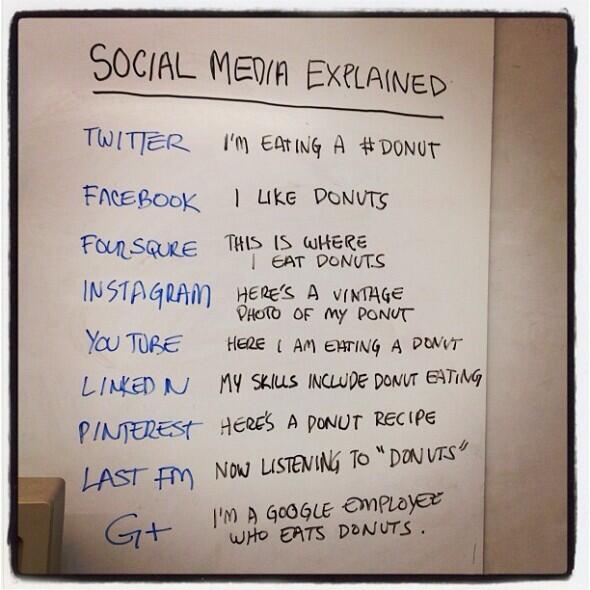
Rhetoric in Social Media. <http://www.middleweb.com/7984/reflecting-on-reflection/>
Social Media Calls for Rhetoric
Social media is considered a modern tool, and more importantly, an extremely convenient form of communication. Some scholars have even stepped out to rename the concept of social media as “digital rhetoric.” According to the authors of Digital Rhetoric, social media can be recognized as a challenging and remarkable reality. Take social networks Twitter, Facebook, and Instagram for example. They insist that overall at this moment in time, (i.e. culture, history, technology, and finances) “digital technologies have infiltrated so many aspects of daily life and everyday communication,” therefore, proving its usefulness and convenience, virtually leading to its demand; it is a result of the ways in which technologies have converged in recent years.
However, it is appropriate to state that never before have writers had the tools to integrate text and graphics or any other elements digitally; works of rhetoricians were always written or orated. This notion of digital rhetoric essentially dates back from Aristotle and his concept of rhetoric. Aristotle suggests that, “Rhetoric is the faculty (dunamis) of discovering in any given case the available means of persuasion” (Herrick 69). This Aristotelian definition appeals into three artistic proofs—logos, ethos, and pathos, which are the persuasive tools needed to effectively convey the speaker or writers message (Herrick 79). Social media has taken rhetoric to a new level, contemporarily becoming one of the dominant forms of persuasion. Although social media still demands the Aristotelian appeals, changing technologies impact the way information is now being presented. In brief, this composition puts forth the idea to analyze the paramount importance of rhetoric in social media, especially in networks such as Twitter, Facebook, and Instagram.
According to author Laurie Gries, social media is a fundamental shift in the way people communicate and discover new information; social media has become so advanced so that its users can dynamically publish their thoughts and ideas to virtual spaces. Gries also suggests that the distinction between lasting texts and pragmatic communication have broken down, and all kinds of communication are being digitized;” hence its demand, convenience and the relationship dynamics between technology and its users (Figure 1).
Furthermore, extensive research has been done to show the rhetorical strategies found in new media composition and photographs. Popular social media platform, Facebook, allows users to become friends with each other and become fans of brands and artists, allowing for open dialogue between those users are friends with or “like,” (Figure 2). Twitter is another popular social media platform that allows users to engage in dialogue in a similar fashion as Facebook, however, the messages are limited to 140 characters and users do not need to be connected to be able to engage (Figure 3). In the same manner, Instagram (Figure 4) is “based around having friends or followers…when you follow someone, their photos show up in your stream. The only other things you can do are ‘like’ photos and comment on them…it’s currently a very friendly community” (Lux 5). These very social networks demonstrate the concerns of how rhetoric and composition can be used visually to influence or shape how people see things; therefore showing how rhetoric can be used as a vehicle to persuade and shape perceptions of people used throughout social media. The dialogue (logos) between the account users make the use of rhetoric important; hence Aristotle’s first suggestion of why rhetoric is socially useful (Herrick 72).
Not to mention, the internet and social media in general are simply replacing the traditional ways of presenting the art of rhetoric; printed communication is virtually going out of style due to its lack of convenience. The social networks previously stated create a new kind of element for writers and for those who love to express their innumerable thoughts. This space changes not only writing processes, but also communication dynamics between writers (the rhetors) and readers, and between writers and the devices themselves. Take the dialogue between Twitter account users (the “rhetorician”) for example (Figure 3) Herrick states that Aristotle discusses that “the persuasive potential of the speaker’s character (ethos) or personal credibility…should develop from what the speakers says in the course of a speech and not be imported on the basis of prior reputation with the audience. This simply means that in order for the rhetors message to be taken as words of credibility, Aristotle insists that, “the speaker must “exhibit phronesis (intelligence, good sense), arête (virtue), and eunoia (goodwill),” (Herrick 81).
Equally important, once the emotions (pathos) of the audience are aroused, the quality of the message and the writer becomes more appreciated. Moreover, the importance of content appears when it comes to social media discourse and how success is this medium that is rooted in communication theories (Westlake 21). Social media has evolved from being the new and innovative way for news to inform audiences to being another necessary communication tool at the disposal of anybody at any time. All in all, once the rhetor builds credibility, which makes the reader comfortable, it will be easier to persuade the reader to think like the speaker—this is conveniently done via social networks and it is more appealing.
It can be concluded that in the very late age of print, writing and document distribution mostly happens digitally, especially via Twitter, Facebook, and Instagram. The popular social networks characterize our particular social and intellectual moment as the late age of print; print is surely and quickly being replaced by the traditional ways of presenting the art of rhetoric, which is usually by way of speech or preaching. Consequently, printed communication is essentially declining in demand and it is not necessarily appealing to a lot of audiences, especially the tech savvy ones. Besides, when it comes to successful social communication theories (Aristotle’s Artistic Proofs- logos, ethos, pathos) are applied to persuade the reader or readers to hear the message with hopes of trusting and understanding it. Social sites such as Facebook, Twitter, and Instagram display rhetorical strategies found in new media composition and photographs; the platform allows users to become friends with each other using rhetoric as a vital tool. According to Gries, rhetoric is essentially defined as communication rooted in influence and persuasion and analyzing the different approaches that allows for the rhetor and the audience to take a close look at mechanics behind the persuasion;” therefore, proving its convenience and demand for rhetoric and the necessary structure. It is fair to say that this new innovative way to communicate works of rhetoricians and its audience as well. Social media has taken rhetoric to a new level, contemporarily becoming one of the dominant forms of persuasion. Although social media still demands the Aristotelian appeals, changing technologies impact the way information is now the “new” thing.
Figure 1.
| Multiliteracies for A Digital Age | ||
| Functional Literacy | Computer = tool | Student = tech user |
| Critical Literacy | Computer = artifact | Student = tech questioner |
| Rhetorical Literacy | Computer = media | Student = tech producer |
Figure 2.

Figure 3.

Twitter Profile – @BenzMePlease (rhetor)
Bio- disclaimer
Figure 4.


Instagram Profile- @ResilientMercedes (rhetor)
Bio = disclaimer of what to expect from posts; they convey messages and reveal personal characteristics.
-2K followers (audience)- Various personalities to appeal to/ Expectations of effective messages vary.
Comments- the engagement of followers who are comfortable to put up a debate or simply show interests in the posts
Works Cited
Gries, Laurie E.. “Emerging Methods of Visual Rhetorics.” JAC 29.1/2 (2009): 437-450. Web. 1 Nov. 2014.
Lux. Kelly. “What is Instagram and Why Is It So Popular?.” School of Information Studies Syracuse University. (2011).
Teaching Digital Rhetoric: Community, Critical Engagement, and Application.” Pedagogy: Critical Approaches to Teaching Literature, Language, Composition, and Culture. vol 6.2. Duke University Press.
Westlake, E. J. “Friend Me if You Facebook Generation Y and Performative Surveillance.” TDR 52.4 (2008): 21-40. Web. 10 Nov. 2014.
A GRANT PROPOSAL: THE LITTLE KINGS AND QUEENS FASHION SHOW
Engl 3130/ Business Writing
Andrea Rogers
Spring 2015
Abstract
This assignment required that I write a grant proposal to acquire funding for a project that I was really passionate about and that could potentially be used in real life. I chose to present a fashion show in my old neighborhood, Raintree Apartments, which would help 50 at-risk children gain a sense of self-esteem and a set of skills that would help them succeed in a business. Not only that, but the kids chosen to model would keep the clothes and stay in contact with their mentors. I essentially proposed that the amount of $18,314 would be ideal for staff training and the equipment needed for the fashion show.
Grant Proposal
Grant Writing For Dummies. <http://www.amazon.co.uk/Grant-Writing-Dummies-Beverly-Browning/dp/1118013875>.
April 27, 2015
Ms. Andrea Rogers
Business Writing Professor
Georgia State University
Classroom South
Atlanta, GA 30303
Subject: Little Kings and Queens Fashion Show
Dear Ms. Rogers:
Raintree Apartments is pleased to present this proposal for your review. We look forward to partnering with you to arrange a fashion show for our residents between ages 5 and 15. As a consequence of being a part of a poverty-stricken community, Raintree Apartments has over 50 children with self-esteem issues. This fashion show aims to help build confidence in these children who come from families that live in low-income/section-8 housing. In addition, we hope that this fashion show will help improve behavior and create possible solutions for each child’s personal goal(s), whether short-term or long-term.
Last summer, we ran a pilot Little Kings and Queens Fashion Show with a small group of children whose parents insisted that their child(ren) was shy, had behavior problems, low self-esteem, and had been ridiculed for valuing and or devaluing academic achievement. In other words, sometimes being too smart was not “cool” or it was viewed as being a “show-off,” but being incompetent was just as bad. Since running this pilot fashion show, we have seen most of the children increasing their ability to hold their heads up high with confidence; they could articulate their thoughts a lot easier and with clarity; some have even made new friends. In addition, parents have reported that their child(ren)’s grades and behavior inside and outside of formal schooling has improved.
Due to the pilot program’s measurable success, we are now seeking to expand our Little Kings and Queens Fashion Show by making it a seasonal event to address the needs of all at-risk children residing at Raintree Apartments. Our proposal requests $18,314 in funding to obtain appropriate clothing the fall, training, property and functional equipment, food, cooking/eating utensils, and transportation; further, we will need to hire mentors to take on a group of 10 children per season, which consists of teaching them to have respect for their neighbors, engage in community service, and to value reading and code switching.
We appreciate Georgia State University taking an interest in helping the children at Raintree Apartments increase their self-esteem through our fashion show! Please call me at 888-555-9120, ext. 123, or email me at mmccrae1@student.gsu.edu if you require any further information or have any questions concerning this proposal.
Sincerely,
Mercedes McCrae
Property Manager
Raintree Apartments
800 West Marietta Street
Atlanta, GA 30318
The Little Kings and Queens Fashion Show: Improving Overall Confidence
For At Risk Children
Submitted to: Georgia State University
Date: April 27, 2015
Mercedes McCrae
Property Manager
Raintree Apartments
800 West Marietta Street
Atlanta, GA 30318
Project Abstract
Raintree Apartments, in Atlanta, Georgia, is seeking a grant to expand our Little Kings and Queens Fashion Show with the objective of helping the 50 at-risk children increase their confidence in many aspects of life. In addition, we hope to encourage them to easily demonstrate teamwork skills, show respect and kindness to others. The objective is, that by the end of the year the children will have improved the overall confidence and behavior of these at-risk children, as well as helping them achieve and surpass their short-term and long-term goal(s). The Little Kings and Queens Fashion Show features indoor and outdoor facilities equipped with stages and other props, food and refreshment accommodations, and mentors that will be a great deal of help to the children and their guests at this seasonal event. Funding in the amount of $18,314 is requested for staff training and to purchase the required necessities for the fashion show.
Literature review
This proposal examines the possible benefits that the 50 at-risk children could attain by valuing fashion; it could increase self-esteem. The purpose of this proposal is to provide Georgia State University with the information necessary for assessing the effectiveness of the Little Kings and Queens Fashion Show. According to Sheila Dicks’ Dress with Confidence: How Dressing Affects your Attitude and Confidence, dressing with confidence will ultimately lead to four key benefits: 1) a positive increase in mood, 2) self-assurance, 3) positive affects in attitude, and 4) improves overall self-confidence (para. 4).
The Little Kings and Queens Fashion Show was created to increase confidence and promote good behavior of 50 at-risk children residing in Raintree Apartments. The Raintree Apartment team, along with hand-picked mentors, was given the responsibility for the following objectives, as reinforced by Jay Borg, author of Top Clothes That Will Boost Your Confident. He insists that using his ten strategies to consciously increase self-confidence will be effective. Nevertheless, Borg lists his ten strageties:
1) Dress in a way that positively affects the way you feel about yourself. 2) Have confidence in your swagger. 3) Possess good posture. 4) Listen to motivational speech that highlights your strengths and goals. 5) Focus on gratitude. 6) Compliment other people. 7) Sit in the front row in public assemblies. 8) Speak up and articulate your thoughts. 9) Stay healthy or in shape. 10) Focus on contribution to others and your community. (10 Simple Ways to Instantly Build Self Confidence).
In conclusion, the purpose of Little Kings and Queens Fashion Show, established by Raintree Apartments is to promote self-confidence and overall good character in our youth and future youth. To accomplish this purpose, with our fashion show, Raintree Apartments kindly asks for help from your organization.
References
Advanced Life Skills. (2011). 10 Ways to Instantly Build Self Confidence. Retrieved from <http://www.advancedlifeskills.com/blog/10-ways-to-instantly-build-self-confidence/>.
Borg, Jay (2014, August). Top Clothes That Will Boost Your Confidence. Retrieved from <http://www.top-clothes-that-will-boost-your-confidence/>.
Dicks, Sheila (2006, May). Dress with Confidence: How Dressing Affects your Attitude and Confidence. Retrieved from <http://www.selfgrowth.com/articles/Dress_with_Confidence_How_Dressing_Affects_your_Attitude_and_Confidence.html>.
Rumberger, Russell W. PhD. “The impact of family and community poverty on high school dropouts.” Poverty and high school dropouts. Retrieved from American Psychology Association.
Statement of Need
Raintree Apartments has 321 children ages 5-15 years old. However, 50 of them have been determined to be at-risk children for a variety of reasons such as: behavior problems inside and outside of the home, low grades in school, and this could be a direct reflection of their economic status. Raintree Apartments asks for your help in hopes to be able to provide an opportunity for these at-risk children to improve their confidence, behavior, and overall self-esteem. They are, as studies show, more likely to be truant and drop out of school and live in low income/section-8 housing. According to Russell W. Rumberger, PhD, the United States is facing a dropout crisis, with an estimated 1.1 million members of the 2012 high school graduating class not earning diplomas (Education Week, 2012). Dropouts face extremely bleak economic and social prospects. Compared to high school graduates, they are less likely find a job and earn a living wage, and more likely to be poor and to suffer from a variety of adverse health outcomes (Rumberger, 2011). Moreover, they are more likely to rely on public assistance, engage in crime and generate other social costs borne by taxpayers (Belfield & Levin, 2007). Poverty and dropouts are inextricably connected in the three primary settings affecting healthy child and adolescent development: families, schools and communities.
Program Description
The goal of the Little Kings and Queens Fashion Show at Raintree Apartments is to enable at-risk children with confidence issues to improve their self-esteem through fashion and through the help of assigned mentors. Children participating in this fashion show will be able to articulate their thoughts and ideas, and be able to speak with confidence, which will help them be sufficient. Included in the Little Kings and Queens Fashion Show are mentors, food accommodations, and equipment needed to make each individual feel comfortable as they enjoy the show.
Goals and Objectives
The goal of The Little Kings and Queens Fashion Show is to enable at-risk children with self-esteem issues and behavior problems to succeed in school, the community, and in the world. Studies have shown that children who live in low-income/section-8 housing are more likely to be disruptive at home and in the classroom, truant from school, and at-risk of dropping out of high school.
The main objectives of The Little Kings and Queens Fashion Show include the following:
- Providing a measurable increase in confidence, behavior, and overall self-esteem. The objective is for students to be sufficient.
- Providing at-risk children with skills that will help them increase their confidence so that it will lead to success.
- Helping at-risk children so that they can continue to progress in any environment.
Budget
The budget includes funds for equipment, food and refreshments to accommodate the at-risk children, their guests and the Raintree Apartment staff. This combination will give children and their guest the greatest experience at the event.
| Price | Quantity | Total | |
| Fall clothing | Estimated cost of $7,500 | 3 outfits per child | $7,500 |
| Hangers | $1 | 50 | $50 |
| Coat racks | $50 | 6 | $300 |
| Moveable runway stage | $1,095 | 1 | $1,095 (purchase) |
| 15 passenger vans | $200 | 8 | $1,600 (rental) |
| Tents | $50 | 6 | $300 (purchase) |
| Cooking utensils | $1 | 50 | $50 (purchase) |
| Grill | $150 | 4 | $600 (rental) |
| Gas warmers | $18 | 18 | $324 (rental) |
| Vendor tables | $45 | 18 | $810 (purchase) |
| Food
Chairs Training |
$3,000
$9.50 $500 |
52
300 1 day |
$3,000
$2,185 $500 |
| Total | $18,314 |
Grant Proposal Time Line
| Activity | Date |
| Submit grant proposal | April 2015 |
| Expected grant notification | June 2015 |
| Set up fashion show equipment/vendors | July 2015 |
| Training session for mentors | August 2015 |
| Mentor/Parent/Child Consultant | August 2015 |
| Fashion show introduction and practice run | August 2015 |
| Little Kings and Queens Fashion Show
Improvement Surveys given to measure the effectiveness of the show |
September 2015
October 2015 |
Conclusion
In conclusion, The Little Kings and Queens Fashion Show puts forth the effort to positively impact the lives of 50 at-risk children (ages 5-15 yrs) that reside in Raintree Apartments. The sole purpose of this seasonal event is to encourage these children whereas as it may yield positive results like higher self-esteem, good behavior, and excellent grades. Five mentors will be assigned 10 children and will consult with their parents to get a better understanding of each child and what needs are to be catered to. We want to highlight the children’s strengths and encourage them to prosper in both short-term and long-term goals. The Little Kings and Queens Fashion Show will have proper show equipment, staff, food and refreshments to accommodate each participant and their guest(s). Funding in the amount of $18,314 is requested for staff training and to purchase the required necessities for the fashion show. We hope that this fashion show will help improve behavior, instill confidence, and promote actions towards each child’s personal goals, whether short-term or long-term.
Engl 3100/ Compostion; History, Theory & Practice
Dr. Michael Harker
Spring 2015
Abstract
This original, unfinished copy of my annotated bibliography was drafted to show that I knew what an annotated bibliography looked like: its purpose was to also show how my understanding of the author’s work helped justify the meaning behind my own topic; hence critical thinking. The work here may appear as abstracts for the sources listed below, but the true intention and idea behind the annotations are clear within the Abstract portion of the annotated bibliography.

What’s an Annotate Bibliography?.<www.youtube.com>.
The Literacy Myth: The Consequences of Its Existence in Higher Education
Abstract
This composition highlights the value placed on literacy and how it, in part, connects to the assumption that The Literacy Myth “is a necessary precursor to and invariably result in economic development, democratic practice, cognitive development, and upward social mobility” (Graff 635). In other words, one will succeed (in various aspects of life) if they can grasp the concept of literacy as it pertains to a political perception. As being more concerned with education, literacy, in this case, stands as a symbol or co-constructed identity that students seem to glorify. Nevertheless, the role of education itself helps to shape intellectual and academic realms within a school system. Within these school systems, teachers fail to take into account that the social positions of these students vary, much being that they come from different discourse communities outside of formal schooling, that is. Notwithstanding, the sources used in this work aims to bring awareness to the consequences the “literacy myth” unfailingly yield when taught in college classrooms. This composition’s purpose is not to disprove the literacy myth, but instead open windows to temporary or lasting effects it has on students pursuing higher education.
Works Cited
Carlson, Dennis. “Beyond The Cave Myth: Re-Mythologizing Democratic Literacy.” Studies In The Literary Imagination 31.1 (1998): 87. Academic Search Complete. Web. 8 Apr. 2015. (Application not yet developed)
Glascott, Brenda. “Identity Papers, Literacy And Power in Higher Education.” Composition Studies 36.1 (2008). (Application not yet developed)
Graff, Harvey. “Illiterates and Literates in Urban Society.” Excerpt in “The Literacy Myth: Cultural Integration and Social Structure in the Nineteenth Century.” 1991. 77-93. ebrary. Web. 19 Apr. 2015.
In this book, Graff poses a study that clears the air about literacy and its placement in society and in schools. “The Literacy Myth” as he calls it, plays a significant role in in historical scholarship, social and cultural understanding, economical developments and social doctrine and ideologies. Here I can apply the idea of negative consequences (e.g. false hope and the nightmare of unsuccessful careers) that come from implementing the literacy myth in higher education as these schools make efforts to legitimize the literacy myth. Not exactly sure what motives are behind these processes, but whatever they could be is very dangerous for current college students and those to come.
Graff, Harvey J. “The Literacy Myth At Thirty.”
Graff argues that the Literacy Myth is an inescapable belief that is needed to be successful. According to Graff, the Literacy Myth means that obtaining literacy unfailingly results in benefits such as, economic development, democratic practice, cognitive enhancement, and upward social mobility—these benefits cannot be obtained in any other way except through literacy. In other words, literacy is “a necessary precursor” to achieve these matters of security. However, this is not the case considering that as a Western culture ideology, the Literacy Myth stands as a symbol that almost guarantees ultimate success, but for reasons such as poverty, declining cities, and discrimination unfortunately contradicts this “myth.” When applied to “The history of literacy and schooling demonstrates that no mode or means of learning is neutral. Literacy is a product of the specific circumstances of its acquisition, practice, and uses, and reflects the ideologies that guide them” (645). Literacy and the lack of educational funding, which also leads to lack of resources (e.g. books, paper, writing utensils, safe and functioning facilities, computers, etc.) may play a major part in the extent of access that each student may or may not have. This…
Johnston, Bill, and Sheila Webber. “Information Literacy In Higher Education: A Review And Case Study.” Studies In Higher Education 28.3 (2003): 335. Academic Search Complete. Web. 8 Apr. 2015.
In this article, the developments of the UK, US and Australia are examined to review and critique the prevailing methods of teaching literacy in the higher education sector. The problems found with the current practices are identified as having staff in the schools that lack knowledge, training and power to influence the curriculum and not to mention, they have poor testing methods. In order to successfully find an answer to this issue, a case study was designed to analyze “information literacy” in Strathckyde Business School, and the effects literacy has in the classrooms. Information literacy, in this case, is “is the term used to describe a number of initiatives in higher education that seek to meet the broad demands of the information society.” It later evolves into being “the adoption of appropriate information behavior to obtain, through whatever channel or medium, information well fitted to information needs together with critical awareness of the importance of wise and ethical use of information in society” (Johnston & S. Webber). The article concludes by proposing models for the information literate student and the information literate university asserting that these universities should adopt a policy of becoming information literate in order to lead, rather than follow, the information society. Here, I believe in many ways that the literacy myth is reinforced. It is also evident that advocating this kind of thinking within the classrooms may result in some positive consequences as the literacy myth does have some truth, but this can set students up for failure when their plans for success fail.
Lankshear, Colin. “Literacy Studies in Education: Disciplined Developments in a Post-Disciplinary Age.” 1999.
Here, the emergence of literacy became the focal point in education theory and practice. By the 1980’s, academic advancements have been achieved through post-disciplinary development as studies show in Socioliteracy. Socioliteracy claims to have provided people working in the English, language and linguistics field with important material for pedagogy courses. Some authors in this work even argue that social worlds are created and sustained by human beliefs and the importance they place on the meanings of symbols. And what we humans know as literacy is contestable and the decision from there are left to us.
Maloney, Wendy Hall. “Connecting The Texts Of Their Lives To Academic Literacy: Creating Success For At-Risk First-Year College Students.” Journal Of Adolescent & Adult Literacy 46.8 (2003): 664. Professional Development Collection. Web. 17 Apr. 2015.
In this article, the headline reads, “At-risk first-year college students in a higher education access program were successful on standardize literacy proficiency exams and retention measures.” This led the faculty of public colleges to design the SEEK Program (Search for Excellence and Knowledge), which is compensatory literacy course that aims to teach students various strategies to accomplish good work and academic conventions (The Institute for Higher Education Policy, 1998). These teachers of public colleges responded to college freshman failing placement tests and doing poorly on essays, especially after the open admission policy took effect. Students that graduated from the most dangerous schools in New York came to CUNY and it essentially alarmed the teachers. CUNY then became a case point for these compensatory programs, which led students to participate fully and successfully in the intellectual life of the college, learn academic literacy, such as reading, writing, and speaking the “language” of the academy with all of the conventions of its discourse.
An Extended Argument: Standardized Testing is Bad for Students
Engl 3080/ Persuasion, History, theory, and Practice
Dr. Elizabeth Lopez
Fall 2015

“Animal Testing” Comic. <www.scoop.it>.
Abstract
This argumentative essay is an extension of my original piece, which debates the influences and results of standardized testing in higher education. Ultimately, I came to the teachers defense and insisted that they are not the ones to blame if a student does not meet the requirements for the test. And, for the teachers to get the distasteful backlash from parents and local citizens only represents the ignorance and failure of the community where these schools stand.

What’s Wrong With Standardized Testing Part II. <http://educational-alternatives.net/welcome/?page_id=435>.
Don’t Blame the Teachers!
A great question comes about in Diane Ravitch’s blog titled “Why Do American Students Take So Many Standardized Tests?” Well, although there may be more than one answer to that question or perhaps no answer at all, I bet that we can all agree to say that regardless of what it is, the teachers will get the most backlashes if a student fails or makes below a certain requirement for a standardized test. We can assume the reason is owed to the fact that most, but not all, parents and school staff members depend solely on the teachers to teach the curriculum by a certain timeframe. Because of this dependency issue, this composition will shed light on a few of the problems with teachers being evaluated for his/her students’ standardized tests scores.
Author Valerie Strauss notes that the Council for Great City Schools conducted a two-year study that brings light to the issue that: “American students are drowning in standardized tests.” She continues saying that the average student in America’s big-city public schools (66 school systems) takes approximately 112 mandatory standardized tests from the beginning of grade school all the way up until the end of their senior year in high school. Not to mention, that equals to about an average of about eight standardized tests a year. WOW! That takes up a lot of study time, leisure time, and time focus on other priorities. Strauss says it take up between 20 and 25 hours every school year.
Moreover, Strauss mentions that the studies show:
Students in the 2014-15 school year sat over 6,500 times for tests, taking tests with 401 different titles…High-stakes standardized testing has become a hallmark of modern school reform for well over a dozen years, starting with the use of these exams in the 2002 No Child Left Behind law to hold schools “accountable.” The stakes for these exams were increased with President Obama’s $4.3 billion Race to the Top funding competition, in which states could win federal education funding by promising to undertake specific reforms — including evaluating teachers by test scores and adopting “common standards.”
What this means is that standardized testing is not going anywhere owing to it being widely accepted and seemingly necessary for school systems; hence it being a hallmark. In order for a school system, especially a public school system that integrates at-risk students, to receive government funding, monitoring and evaluating the teachers to see if they are doing their jobs is very much needed, whether we, the people, like it or not.
Let us take a look at the mentioning of Obama’s Race to the Top funding competition. According to the U.S. Department of Education, what this competition entails is:
- Adopting standards and assessments that prepare students to succeed in college and the workplace and to compete in the global economy;
- Building data systems that measure student growth and success, and inform teachers and principals about how they can improve instruction;
- most; and
- Turning around our lowest-achieving schools.
Not to mention, awards for the winning competitors will go to the states that are leading the way in academia. Although this competition is very rewarding, it is also intimidating. It puts a lot of pressure on first the participating states, then the cities and county the school systems are located, which will in turn depend on the teachers to “make it right”—reforming the school to mock other schools that have “ambitious yet achievable plans for implementing coherent, compelling, and comprehensive education” does not seem impossible, but come on; is it necessarily a realistic goal for teachers, especially if they are required to mock or at least implement the ways of these top schools?
To add fuel to the fire, “the Race to the Top winners will help trail-blaze effective reforms and provide examples for states and local school districts throughout the country to follow as they too are hard at work on reforms that can transform our schools for decades to come.” Oh, the pressure! Not only do these schools have to set a great example for neighboring schools, but they will have to set an example for schools throughout the country, eventually. That is a great deal of responsibility and it seems to be very unfair, especially when all teachers have different teaching methods, and students have different ways of learning and at different speeds, nonetheless.
So, what is done to make sure the schools and its teachers are held accountable? Well, Wikipedia defines the No Child Left Behind Act of 2001 (NCLB) as:
…as a United States Act of Congress that is a reauthorization of the Elementary and Secondary Education Act, which included Title I, the government’s flagship aid program for disadvantaged students. NCLB supports standards-based education reform based on the premise that setting high standards and establishing measurable goals can improve individual outcomes in education. The Act requires states to develop assessments in basic skills. To receive federal school funding, states must give these assessments to all students at select grade levels. The Act does not assert a national achievement standard. Each individual state develops its own standards. NCLB expanded the federal role in public education through further emphasis on annual testing, annual academic progress, report cards, and teacher qualifications, as well as significant changes in funding.
The bill passed in the U.S. Congress with bipartisan support.
The NCLB act certainly, to an extent, contradicts the expected outcome for Obama’s Race to the Top funding competition. It is so much ambiguity that lies here like the Act pardoning mistakes of the schools, which is inexplicitly stated in the “The Act does not assert a national achievement standard” line. However, Obama’s competition is hoping that schools throughout the country follow suit. I mean, if they do not, will they receive a substantial amount of government funding to help the schools improve overall or at least in some major areas that really need it?
Again, standardized testing in the school system is not a new method of measuring students’ basic levels of competency. Along with this testing method comes both teacher and student evaluations. The reason is to see how the schools are developing or reforming overall. But, first it starts with the teachers, who are given requirements from those above them who regulate the laws and standards for the school systems. As stated in a previous essay of mine:
“This seems a bit extreme considering the fact that every student learns at a different pace and in very unique ways, which distinguishes them from their counterparts. So, with that being said, a simple test, or even complex test to say the least, cannot accurately measure the true intelligence of neither a student nor his/her teacher [his/her] ability to apply the lessons learned to practical situations? The intentions of the standardized tests yield more than just test results; stress, anxiety, and a lack of confidence comes with it, too. [ Not only for the students, but more so the teachers.]
All in all, evaluating teachers to judge or get an idea if the student(s) that he/she is teaching is unfair, unrealistic, and outright intimidating. To help a school reform just a bit is one thing, but an entire country is too big of a burden for anyone or any group of teachers to carry. Not saying that some change is virtually impossible, but of course there lie many problems with teachers falling under a lot of pressure from things bigger than themselves. First, the parents get involved, and of course they would like to know why their child is failing or straddling the “average” fence. Then, the principle gets involved and of course the Board of Education, and so on, until the government has to step foot into the situation. That is a scary issue to deal with because everything seems to be at the palm of the teachers’ hands. And in result, will or may affect the teachers’ livelihood and other factors alike.
Works Cited
“Confirmed: Standardized Testing Has Taken over Our Schools. But Who’s to Blame?” Washington Post. The Washington Post. Web. 9 Dec. 2015.
“Diane Ravitch’s Blog.” Diane Ravitchs Blog. Web. 5. 2015.
Korte, Gregory. “The Every Student Succeeds Act vs. No Child Left Behind: What’s Changed?” USA Today. Gannett, 11 Dec. 2015. Web. 11 Dec. 2015.
“Race to the Top Fund.” Race to the Top Fund. Web. 11 Dec. 2015.
Wikipedia. Wikimedia Foundation. Web. 11 Dec. 2015.
Repurposing a Previously Written Work: Analyzing Langston Hughes’s “Harlem”
Engl 3105/Practical Grammar
Malinda Gar Snow
Fall 2015
Abstract
Dr. Malinda Snow suggested that I submit a writing from a previous class. The point was to repurpose the work and act as an appropriator, who would transform the composition to not only make sense for a Practical Grammar class, but to show what I learned in her class as far as subject-verb agreement, proper punctuation, and demonstrate the appropriate placement of commas, colons, and semicolons.

Harlem. <www.slideshare.net>.
Unfolding the meaning of “Harlem”
The poem “Harlem” by Langston Hughes dramatizes the conflict of hopes and efforts powered by the American dream and the harsh reality of Black oppression. Highlighting the unfair treatment of Blacks in America, the poem emphasizes how Blacks were not considered in any attempts of cultural change. Consider the Civil Rights Movement, for example; it served as a campaign for Blacks dealing with inequality, which in part, directly reflected the racism. Harlem, serving as both the title and the setting of the poem is where many Black artists and writers such as E. E. Cummings, Maya Angelou, just to name a few, made a place for themselves to shine. Although, Hughes, as well as other talented individuals, got his deserved exposure for his artistry and craft that represents the area in which black culture locates itself, but is also isolated from the rest of America; it made little impact on Blacks having any chance(s) of being equally accepted. However, “Harlem” discusses such notions with its opening line, subsequently followed by questions either rhetorical or too difficult to determine and absolute answer. When considering the questions to be rhetorical, the reader can then infer that the questions are not to be answered to begin with, but are really there to ponder on: “What happens to a dream deferred? / Does it dry up [?] (1, 2). The following question set a tone of frustration that may seem either temporary of permanent, which leads to the full interpretation of the poem.
Hughes’ use of alliteration throughout the poem gives the audience a sense of exhaustion. For example, the ‘s’ alliteration requires the reader to push out air to form these words in succession: raisin, sun, fester, sore, stink, crust, sugar, syrupy, sweet, and sags. The more air that is used to push out these words, the more draining it seems to be. Additionally, the ‘d’ sound is used almost as if Hughes demands attention, which may assert that what he has to say should not be taken lightly. For example, he uses words like: dream, deferred, does, dry, load, and explode. Usually, words with the ‘d’ in poetry are used with emphasis, crating a louder sound and using more air as well leaving the reader exhausted; hence making the reader empathize a little more with the frustration and exhaustion that Blacks have with being included in the American Dream.
Implications of music can be viewed throughout Hughes’ poem. Take the Harlem Renaissance, for example; it was a major creative explosion in music, literature, and art that occurred during the 1910s and 1920s. According to Hutchinson:
Harlem Renaissance, a blossoming (c. 1918–37) of African American culture, particularly in the creative arts, and the most influential movement in African American literary history. Embracing literary, musical, theatrical, and visual arts, participants sought to reconceptualize “the Negro” apart from the white stereotypes that had influenced black peoples’ relationship to their heritage and to each other. They also sought to break free of Victorian moral values and bourgeois shame about aspects of their lives that might, as seen by whites, reinforce racist beliefs.
Other poetic devices employed in “Harlem” are the use of imagery, allusion, and similes. Hughes uses words that make the reader visualize what a deferred dream looks and smells like after it had been delayed for so long. For instance: “Does it dry up like a raisin in the sun? / Or fester like a sore- / Does it stink like rotten meat?” (2, 3, 6). These lines crate a sad and unpleasant picture while comparing a dream to unlike things; the once ripe grape is now dried up and stripped of its appreciated juices; the picture of an infected sore is disgusting; and lastly, the smell of rotten meat can potentially make the reader cringe at the thought. Hughes succeeds in using such comparisons that bring about ill-feelings to create that same upset in regard to the deferred dream(s) of Black Americans. Additionally, the literary element personification lends human characteristics to what is inhuman: can run, sag, or explode (5, 6, 11). Running, as a human might do, away from those attempting to chase the American Dream; sagging like the bags underneath tired eyes or as a man carrying a “heavy load” may do; and exploding, as one who has held in his/her anger for far too long. The terminology here can serve as a warning; the black community will rise up and fight for what they believe they deserve or have been deserving since the ending of slavery. In this passage, the personification and allusion to more realistic occurrences suggests that a dream cannot do these things while still inflicting those thoughts upon the readers’ minds.
Furthermore, Hughes uses the symbol of crust and sugar to describe the acceptance of less than what is deserved by Blacks from America. “Harlem,” in a time where Hughes flourished as a writer, was almost a separate entity of America; housing many Black hopefuls whilst keeping them at a disadvantage in which they still were unable to advance. As it seems, the sugar and crust of “Harlem” represents the Blacks being content with the partial acceptance in America. It is as if Hughes is saying that America “sugar coats” the truth, or uses crust to completely cover it by insisting that Blacks have a part of the American dream, which some Blacks will accept and be satisfied with.
Hughes later argues that a dream may sag like a heavy load (10, 11); here, he is not just referring to a simple dream anymore. Rather, he is depicting the countless burdens that Blacks have to carry since slavery. A load is an excessive amount of different disapproval from society from stereotypes to blatant mistreatment and being shunned in various cities and places. Hughes’ line that mentions “heavy load” suggests that the dream that Blacks are chasing (i.e. equality and acceptance), essentially holds them down as if it sags on their backs. Or, perhaps when it seems like they have caught their dream (e.g. the Civil Rights Movement, the Million Man March, rioting, sit-ins) the results yield a change that is only short-lived; yet again, it becomes only just a dream. At this time, Hughes call for action, ascertaining that Blacks must realize their unacceptance and drum up a dream of their own that is less American, and more Harlem. Not saying that Blacks cannot have privilege like those of Whites or have the corporate jobs and things of that nature, but Blacks should have a different set of goals for themselves that links back to the times before they could even identify with slavery.
When readers consider Langston Hughes and Harlem as a setting, during the time when writers were prominent in that Black culture, it should then be recognized that Blacks were not considered Americans as much as Whites were. If one were to look at Harlem as the America for Blacks, where the city is flooded with what was considered promise and prominence for Blacks in that era, then “Harlem” calls for them to realize that the American dream they desire is not their own.
All in all, Langston Hughes’ poem “Harlem”, serving as both the title and the setting, opens a discussion around the struggles that Blacks have dealt with in America up to that point in time (i.e. Black oppression, racism, mistreatment, inequality.). Although he may not blatantly state every issue Blacks have dealt with during that time, it can be assumed that the reader can make connections to historical events (e.g. The Harlem Renaissance, Civil Rights Movement) that had taken place in attempt to make change, or at least make Americans aware of the issues going on around them. The constant racism and inequality took a toll on Blacks and eventually they became tired. So, Hughes stood in as a voice for them through his poem.
Works Cited
Allen, Austin. “Harlem.” Poetry Foundation. Poetry Foundation. Web. 8 Sept. 2015.
“English Online.” Civil Rights Movement. Web. 16 Dec. 2015.
Hutchinson, George. “Harlem Renaissance | American Literature and Art.” Encyclopedia Britannica Online. Encyclopedia Britannica. Web. 16 Dec. 2015.
Engl 3115/ Multimodal Composition
Dr. Mary Hocks
Spring 2016
Abstract
Dr. Hocks gave me permission to explore any topic I wanted for my major project. This idea was to be summed up in a 3-5 minute elevator pitch, which would then be lectured to the class and submitted via Brightspace/Desire to Learn. The purpose of this major project is to present rhetoric in a multimodal space and illustrate how the different modes (i.e. linguistic, aural, gestural, spatial, and visual) are interdisciplinary.

Tech-Savvy. 2015. <http://www.seartec.co.za/how-to-adapt-to-an-increasingly-tech-savvy-workforce>.
Major Project Proposal
For my major project, I will like to remix a couple of familiar shows or videos where the manipulation of sound would essentially change the content and meaning of those particular shows or videos. Take the popular Unsolved Mysteries for example; it is a more serious show that has a narrator with a deep and chilling voice, plus, an almost menacing background song, which in ways prepare the viewer(s) for the unexplainable, eerie, and most horrifying stories surrounding peoples’s lives. Because of the dark voice of the narrator and even darker background music, the viewer(s) is left to feel a sense of sadness and sympathy for those involved in the mysteries. However, if the narrator’s voice is changed to a more high-pitched, cartoon-like voice and the music is changed to the theme song of that of a popular sitcom, then the expectations and perceptions of the show will definitely change. The viewer(s) may not take the show seriously, and instead find it more amusing: this would then disconnect the viewer from the people involved in the mysteries while taking away importance of the show’s purpose and content. Moreover, I feel that the best way to deliver these remixed pieces would be through applications such as iMovies or Final Cut Pro or something similar, more user friendly, and easy to access. The purpose of this idea is to convince the class, my audience, to understand how sound and sound-rhetoric affects emotion and effects interpretation. I think my audience would be entertained by my presentation considering that they live in a society that is moving forward with technology very fast.
Optional Assignment
Engl 4320/ Senior Seminar
Dr. Robin Wharton
Spring 2016
Abstract

I Winder| Unlocking the Growth Trust. <www.unlockingthegrowth.com >
For this assignment, I was given the opportunity to write a review and analysis of an event or podcast for extra credit points. This piece stems from the original assignment for a different class that called for an analysis of sound rhetoric–sound playing a critical role in how the reader perceives the story. Here, however, I chose to shed light on the discourse surrounding cultural/gender codes and how this theme of taught gender roles affect how individuals of the biological male/female sex are perceived and discussed in today’s society.
Review and Rhetorical Analysis of Serial Episode One: Season 1
Summary
In the podcast surrounding the 1999 murder of a teenage Hae Lee in Baltimore, Maryland, her ex-boyfriend, Adnan Syed, became the prime suspect. Over a course of years, a now 32-year-old Syed had gone through much interrogation and stress regarding a murder he supposedly committed back in his high school days. Although he hasn’t been consistent with the events surrounding that day his ex-love died, he has persistently claimed to be innocent. Him not being able to remember exactly where he was and when that day has not helped his case, especially in front of an audience who felt that he was guilty from the beginning. This composition is concerned with exploring how a person’s gender and sex may influence how others view them.
He’s a Killer Because He’s a Man?
In Syed’s defense, maybe he is innocent. All of the individuals dealing with the legal side of things supposedly did not handle the case with sensitivity, and proper/careful consideration. For example, Syed’s schoolmate by the name of Asia, could recall exactly where Syed was that day as she claims they had had a conversation inside of the library during the time Lee was murdered. She wrote notes and journal entries that documented these facts, but, unfortunately Asia’s testimony was never considered. Also, Syed’s appeal was denied because Asia’s documents did not have time-stamps to “prove” that Syed was indeed in the library. Every individual dealing with this case played a critical part in how Syed’s life would turn out. It would not be farfetched to say that because he is male, the public automatically assumed him to be the aggressor/suspect. And because of this preconceived notion of men, when factors such as Syed’s body makeup and gender come into play, it seems that the jury could not have cared any less about aiming to prove his innocence.
From a psychological standpoint, men being physically aggressive and violent is commonly linked to their identity and masculinity. According to Dorian Furtuna Ph.D. men are commonly connected to war, criminal gangs and anything surrounding crime and violence. Liz Lane’s “Feminist Rhetoric in the Digital Sphere: Digital Interventions & the Subversion of Gendered Cultural Scripts,” she talks of expected culture/gender codes. Is Syed’s case built from the sheer thought of these expected codes of a man having to be masculine and aggressive to validate his manhood? And because of this, why is his sex and gender his essential downfall rather than hard facts of his participation in such a heinous crime?
In Need of Feminist Support: Who Is Hae Lee?
Throughout the podcast, the audience only learns that Hae Lee was a popular student who dated an even more popular athlete. Sure enough when the audience learns of her murder, a brief sad song was played with a small description of where she was headed the day she was killed, and immediately the story was taken over by the discourse surrounding a male, Adnan Syed. Nothing is learned of her personality or how her death has affected her friends, family, and neighbors. Because of this, the audience is robbed of the opportunity to sympathize with this traumatic event and neither can the audience connect to the victim because the story does not develop her character in full, but conveniently learns the good and bad behaviors of Syed. Referring back to Liz Lane’s article, Lee’s story and identity was swept under the rug because in the eyes of a male dominant society, she couldn’t stand a chance to be noticed compared to her male counterpart, whether dead or alive. As harshly as that sounds, that is, in some cases, the reality surrounding the battle of men and women.
Works Cited
Fortuna, Dorian, Ph.D. “Male Aggresion.” Psychology Today. 22 Sept. 2014. Web. 22 Feb 2016. <https://www.pyschologytoday.com/blog/homo-aggressivus/201409/male-aggression>.
Lane, Liz. “Feminist Rhetoric in the Digital Sphere: Digital Interventions & the Subversion of Gendered Cultural Scripts – Ada: A Journal of Gender, New Media, and Technology.” Ada A Journal of Gender New Media and Technology. 2015. Web. 22 Feb. 2016.
“Season One.” Serial. Web. 22 Feb. 2016
Hypothes.is Annotations
Engl 4320/ Senior Seminar
Dr. Robin Wharton
Spring 2016
Abstract
Present is a link that features a list of annotations, which show my level of engagement with the assigned texts. The annotations includes notes, definitions and brief explanations of what the readings influenced me to think about. These thoughts have since then been included in my Critical Thinking Through Writing Responses. The readings annotated on my hypothes.is account include: Feminist Rhetoric in the Digital Sphere: Digital Interventions & the Subversion of Gendered Cultural Scripts by Liz Lane; The Embodied Classroom: Deaf Gain in Multimodal Composition and Digital Studies by Leanne Hunter; How to Teach Kids About What’s Happening in Ferguson by Marcia Chatelain; OPINION: Inspiration porn further disables the disabled by David M. Perry; and The Fibreculture Journal: FCJ-173 Being and Media: digital ontology after the event of the end of media by Justin Clemons and Adam Nash.
https://hypothes.is/stream?q=%23seniorportfolio